
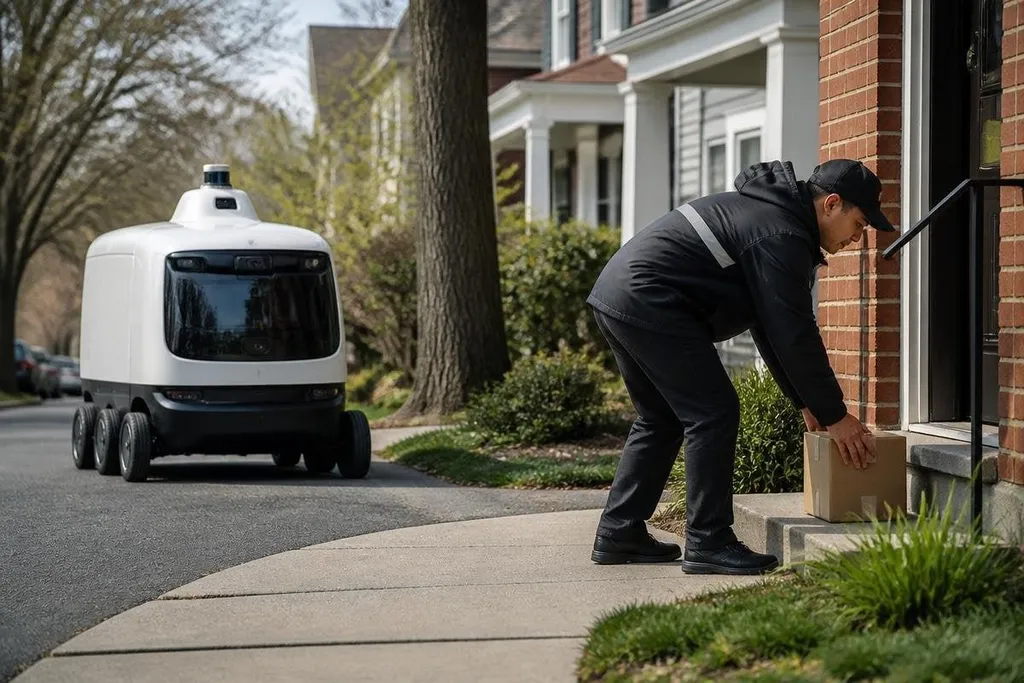
A delivery job includes far more than time on the road.
It involves loading parcels, finding addresses, handling exceptions, and handing items to people, so automation may change different parts of the work at different speeds.
The effect on jobs will depend on which task a company automates, how often the system fails, and who remains responsible when a delivery goes wrong.
- Route software can reduce time spent planning stops
- Autonomous vehicles may handle parts of a trip
- People will still manage many handoffs and problems
The first changes will happen behind the wheel
Route software already lets dispatch teams assign stops and adjust plans when traffic or new orders change the day. That can reduce some planning work, but it doesn't remove the need for a person who understands road access, customer requests, and vehicle limits.
Autonomous vehicles could cover more of the trip on roads that are easy to map and monitor. A human may still need to take control near building entrances, construction zones, narrow streets, or bad weather. The job could shift from constant time on the road toward supervision and local problem solving.
That change depends on the system's operating area. A vehicle that works on a fixed route between a depot and a secure site faces fewer problems than one serving hundreds of homes with different entrances.
Walking the last few metres is harder
The final part of a delivery creates work that maps don't show. A driver may need to find the right door, use a lift, enter a building, call a customer, or carry a parcel across uneven ground.
Small delivery robots could do some short trips from a local hub. Their limits are clear: stairs, blocked pavements, theft risk, and a customer who isn't home can turn a short route into a human task.
Drones face a different set of limits. They need a clear flight path, a safe drop point, and rules for operating near homes and public places. They also carry less than a van, so a person may still bring most parcels to the area before a drone makes selected deliveries.
Jobs may move toward exceptions
When software handles routine work, people spend more time on the cases that do not fit the plan. A worker may check a damaged parcel, speak with a customer, move an item to a secure location, or decide what to do when a vehicle stops.
Those tasks need judgment and physical action. They can also bring more pressure if a company measures workers by how quickly they clear problems rather than by the quality of the service.
The number of delivery jobs that automation changes can't be stated honestly without a named company, route, vehicle type, and trial period. A claim about job losses without those details is guesswork, not reporting.
Delivery automation needs a work record alongside a robot record: the route, vehicle, trial dates, and tasks still handled by people. A dated report from Robot24 can connect those details to the companies and systems involved, giving workers and managers a firmer basis for the questions that follow.
What workers and managers should watch
The most useful question is not whether a robot replaces a driver. Ask which task disappears, which task remains, and who carries the risk when the system stops.
A delivery role is more exposed when its work follows fixed routes, uses standard parcels, and takes place in controlled locations. A role is harder to automate when it depends on local knowledge, human contact, unusual buildings, or decisions made under changing conditions.
I'd expect the early result to be fewer routine hours on the road and sorting tasks, with more work in supervision, customer support, vehicle recovery, and parcel handling.
A practical test for each route
Before a company changes a delivery role, check these points:
- Map the task: separate loading, driving, parking, walking, and handoff work.
- Count exceptions: record blocked access, failed deliveries, damage, and customer calls.
- Set control rules: name the person who can stop the system and take over.
- Check the training: list the new skills workers need before the trial starts.
- Measure service: compare missed deliveries, delivery time, injuries, and worker hours.
This test also gives workers a clearer question to ask about a new system: will it remove the whole job, or will it move the hardest parts into a different role? The answer should come from route records and trial results, not a launch video.